
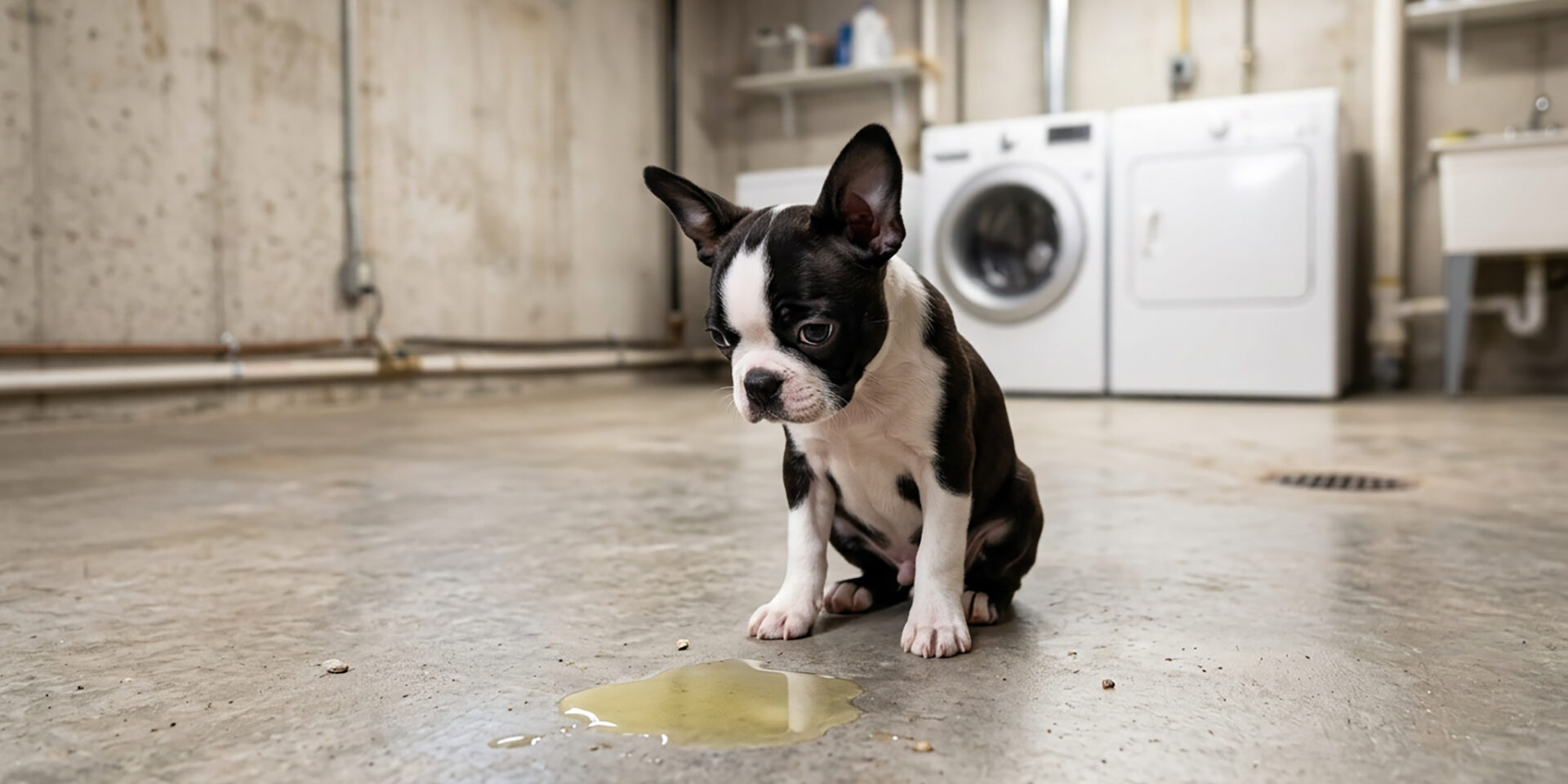
Why Urine Odors Persist In Concrete
If you can imagine, a lot of calls come in asking why urine odors persist in concrete. As the guy out in the field solving this problem for clients, more research on the subject became necessary. After some deep research this is what I discovered…
Enzyme cleaners work great… sort of.
When a dog or cat pees on concrete, most people grab an enzyme cleaner to clean it up. This works great because the urine hasn’t had time to crystallize inside of the substrate. I usually use Odor Kleanz for my clients when this happens. The enzymes in the cleaner break down the limited uric acid in the urine pretty quickly. It also has beneficial bacteria in it which continue to break down the bad bacteria for up to a week after application.
Calls only come in when the smell is pretty bad… ha! And this type of cleaner paired with a high psi pressure washing usually does the trick. Especially for dog urine odors. For an interior concrete slab, an extractor machine can handle the job. These machines typically serve for tile and grout cleaning. They spray down a low psi (usually 1,100 psi) stream of water and vacuum up the dirty water so there’s no puddling inside of the home. But cat urine is an entirely different monster. That comes up in a second.
What causes urine smells in concrete?
No scientist here, but a layman’s breakdown of the discoveries goes like this. Basically, all urine has uric acid in it. When it dries it crystallizes either on the top or inside of the substrate. This forms sodium urate. This stuff will fill up the capillaries inside of the concrete and actually bond to the minerals inside. This builds up over time the more the concrete is peed on.
Technically, urea is odorless. But bad bacteria create an enzyme called urease that break down the urea into ammonia. This is what causes the nasty smell. If that doesn’t sound bad enough, here’s what’s worse…
The sodium urate (or urine salts) re-activates with moisture. That means they’re hygroscopic – readily absorbing moisture, as from the atmosphere. As the urine spots in the concrete suck up moisture during the rainy season or when humidity is high, dormant bacteria start reproducing and the horrible odors come back with a vengeance.
On top of that, breathable concrete surface sealers can trap these uric crystals inside of them. So even if the floor has a sealer on the surface it can still have persistent urine odors. Breathable sealers just aren’t meant for prolonged and repeated exposure to urine. It’s just a fact. The only way to remove the odors from a topical sealer is to remove the sealer from the surface of the concrete completely. By the way, it’s not a fun process!
Why is cat urine so stubborn?
Cat urine smells worse than dog urine… here’s why. Felinine is an amino acid that contains sulfur. Cat’s urine has this amino acid in it, not dogs. As this stuff breaks down over time it produces thiol, which has a skunky smell. This is what makes cat urine smell so much more potent than dog urine.
Non-fixed male cats produce more felinine so when they mark their territory it smells more pungent. It also breaks down slowly so smells can actually get worse over time. I know, it’s gross!
Why urine odors persist in concrete – The concrete dilemma…
Concrete acts like a hard sponge, it absorbs practically any liquids that touch it. It’s usually very expensive to replace and might not even be an option if it’s the foundation of the home. Breaking down the uric crystals might work but there’s no way to extract the solution from the concrete. This is the dilemma.
Below are the two ways I’ve found that actually solve this dilemma. I’ll explain further…
Lock it in!
If you want to solve the odor problem without changing the look of the concrete, use a deep penetrating sealer like Odor Shield. This type of sealer penetrated deep into the substrate and reacts with the minerals in the concrete. It then crystallizes through the top inch or so of the concrete and makes it almost non-breathable. This permanently increases the density of the concrete. Therefore, the concrete will emit around 90% less odors from one application. Essentially you’re locking in the uric acids so they stop wicking up odors.
This solution works really well on non-sealed concrete. The only times it doesn’t work completely involve extremely porous concrete or heavily diamond-ground concrete. During diamond grinding the “cream” of the concrete is removed from the surface. The cream is the most dense part of the slab and has the most minerals in it for the sealer to react with.
With a very porous concrete slab the odors reduce but might not eliminate completely. You can tell 24 hours after application. Pour water onto the slab and if it doesn’t bead up on top, it’s probably very porous. A second application might be needed at that point. Unlike other penetrating sealers, Odor Shield will cross link with itself and fill in microscopic voids that the first application didn’t completely fill. A very cool feature exclusive to this sealer.
Cover it up!
The other solution is to coat the surface of the concrete with a non-breathable coating. I’ll go over the cheap way to do it along with the decorative way below.
The cheap way to coat your floor is to use a shellac which is non-breathable. Sherwin Williams carries a shellac and can be purchased locally and quickly. These are stinky so make sure you use a respirator and have good ventilation in the area. For esthetics and durability, most people will add another coat or two of Porch and Deck paint over the floor. This will leave the floor with a clean, solid color of your choice.
The downfall of this option is that it doesn’t last super long. A shellac doesn’t hold back hydrostatic pressure so if the slab ever gets moisture in it, the coating will peel up. It also doesn’t bond great so that might cause peeling in the future. This is still a great option if you are on a budget, don’t have a lot of time, or want to sell your home quickly.
The decorative option.
The more decorative option is to use a real, non-breathable floor coating like Titan Coat. The floor usually gets diamond-ground first, then cleaned with Odor Kleanz. The following day the floor gets treated with Creto DPS (Deep Penetrating Sealer). This sealer is similar to Odor Shield but it’s not hydrophobic, meaning the floor will accept a coating over it. It also locks in some of the odor. Then the floor gets two coats of Titan Coat. This coating comes with a cross linker that you add into the base coat. It increases bonding and will prevent delamination from mild hydrostatic pressure.
This process is way more involved but will last practically forever. It’s the professional option and looks great!
Clean up will be easier.
Clean up will be much easier when using a penetrating sealer. The concrete isn’t as porous so accidents can be cleaned up by just using an enzyme cleaner. Smells shouldn’t come back if you’re diligent with the clean ups.
The professional option using a non-breathable coating will be the gold standard if you expect accidents in the future. Unlike a breathable sealer, the coating will not allow uric crystals to penetrate into it. The urine will dry on the surface and can be cleaned up completely. No nasty odors ever again!
By the way, these processes can be used for human urine odors as well. I would recommend doing one of these solutions before completing your bathroom with a concrete floor. That said, it can be done as a restoration project if your bathroom concrete is holding urine odors.
Why urine odors persist in concrete – Final thoughts…
Don’t get overwhelmed, these problems can be fixed. Why urine odors persist in concrete is a common question and there are solutions. If this article didn’t answer all of your questions please let me know. You can get a hold of me through the contact form on the home page. I’ll do my best to help you through the urine odor mitigation process!