
Concrete Countertop Sealer
Recently, I faced a challenging project while applying a concrete countertop sealer. This experience shows how quickly issues arise. However, some problem-solving and flexibility turned this disaster into a success.
The Situation
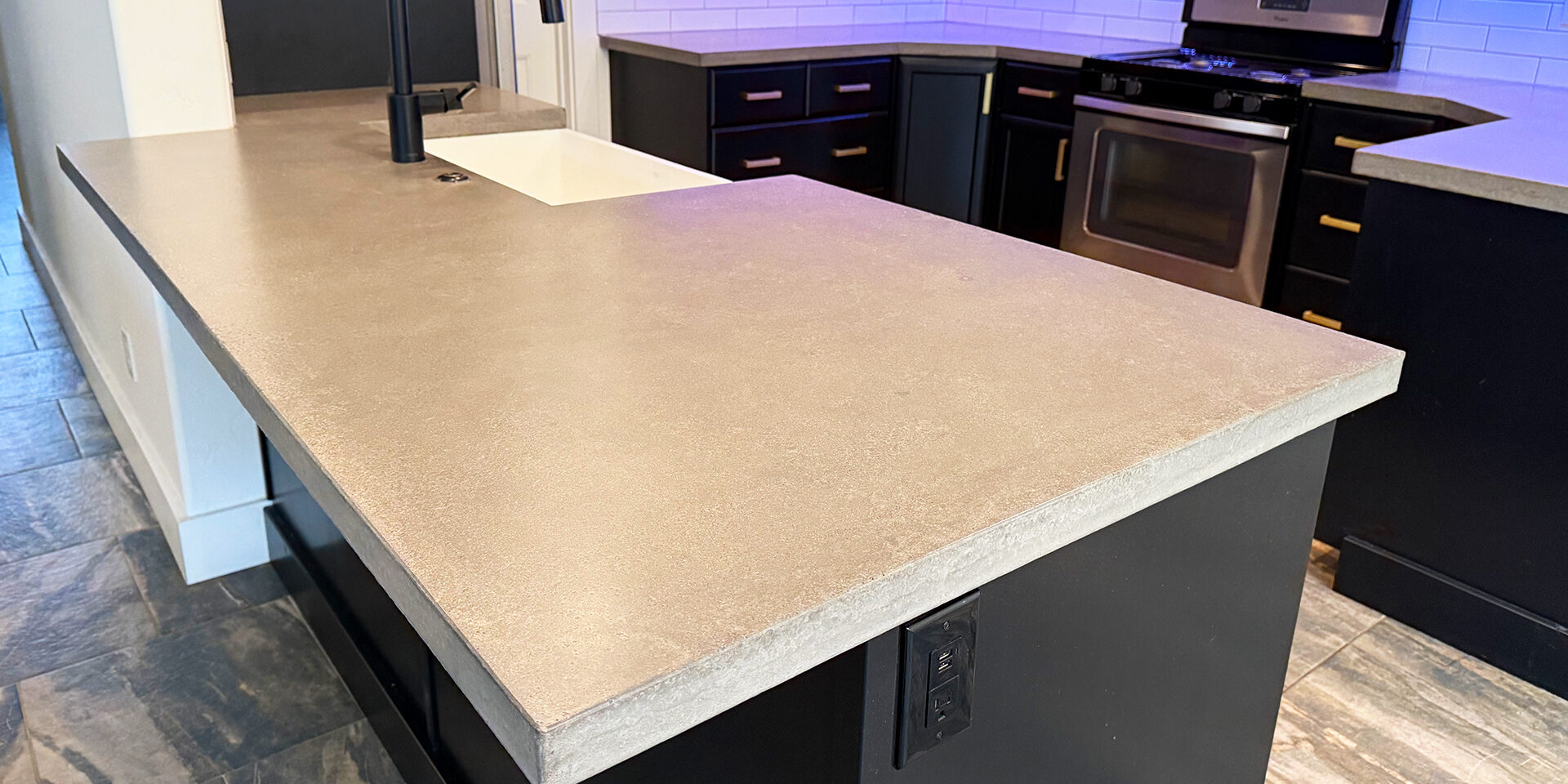
My client owned concrete countertops in his recently purchased home. The old surface sealer failed completely. You could scratch it off easily with your fingernails. Moreover, it wore through to the bare concrete in several spots. Therefore, we needed to fully refinish the counters. We initially planned to polish the countertops… until things went south. First, I removed the old sealer. I chose the Boride Easy Edge 30-grit ceramic cup wheel. Ceramic diamonds avoid heavy grind marks so that’s why I chose this specific diamond. Metal wheels often leave heavy grind marks so this wasn’t an option. So, the Easy Edge worked perfectly. After honing the surface, thousands of pinholes appeared. Some holes looked larger than others. Clearly, the original pour lacked proper agitation. Workers failed to remove trapped air bubbles during the mix.
Problem Solving
No local stores stocked epoxy grout pinhole filler. Additionally, our tight schedule prevented ordering any online. So, I improvised. I filled the holes with a Portland cement mix. Then, I applied EPS (Extreme Penetrating Sealer). I hoped EPS would densify the cement. Consequently, the entire surface could polish evenly. However, multiple polishing steps revealed a problem. The filled holes stayed matte. Meanwhile, the surrounding concrete was left glossy. The difference looked obvious and unattractive. I discussed options with my client. We quickly agreed on a change. Instead of polishing further, we chose a surface sealer. This approach promised a uniform glossy finish. Importantly, dropping to a lower grit would reopen the holes. That would force us to refill everything again. We wanted to avoid that extra work and time.
Concrete Countertop Sealer – Versatec
Fortunately, I selected Versatec nano-quartz sealer. Versatec bonds exceptionally well. It adheres to non-porous surfaces easily. Even better, it bonds to densified concrete (since we used EPS). This feature saved huge amounts of time. We skipped re-honing and re-filling completely. For the final step, I applied four coats of Versatec. I used a flat microfiber applicator pad each time. The countertops transformed beautifully! Now they resist chemicals and strong acids like vinegar and lemon juice. In fact, they outperform polished concrete in protection. Versatec truly saved this project!